

On My Tattoos
A Short Meditation

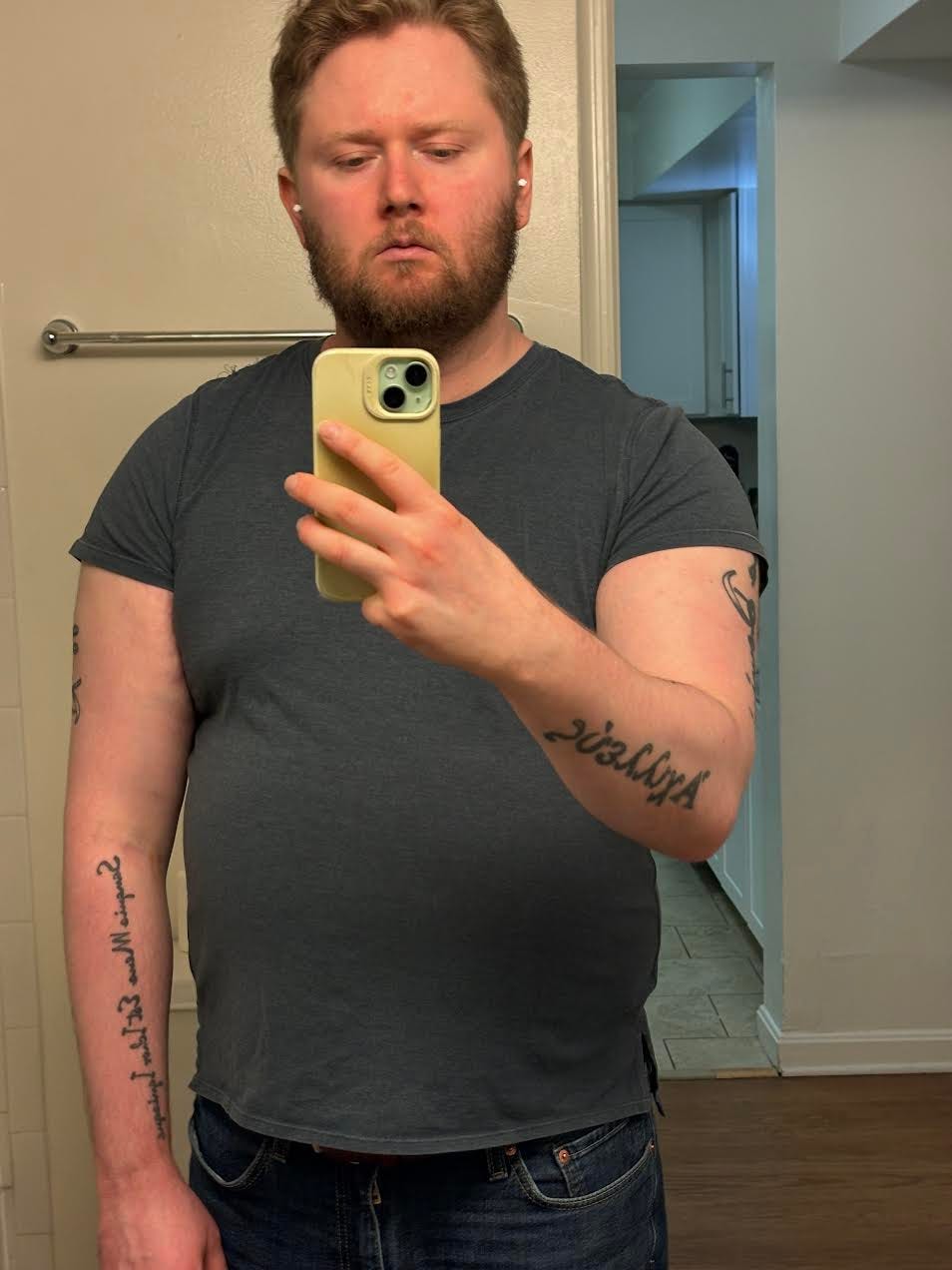
Well, looks like today’s a twofer.
For years, despite always nebulously considering myself Jewish, I was not Jewish in Halakha or in any meaningful sense beyond my patrilineal descent from Ashkenazim. For a long time, roughly between the ages of 23 and 29, I gave up my connection to Judaism as a religion or culture and got a number of tattoos espousing various philosophical mantras on my arms and shoulders, readily visible when I wear short sleeves, but not otherwise if covered (which I always do at shul, even in the middle of Summer).
There was nothing unsettling to me in this, but in the last year or so I’ve become not entirely comfortable with them, despite being unwilling to go through the tedium and expense of removal. In a probably overly-racialized and self-conscious manner, the fact of literally being a blond dude with a number of pagan symbols prominently marked in black on his skin has become unsettling, and I now wonder if there was some nebulous antisemitism, whether internalized or a certain skeptical indifference, in the decisions of my younger self: a rejection of Judaism as then-alien and irrelevant to me, so to speak. The marks read respectively: “Achilles Ho’Athantos” [Achilles the Undying] in Greek on my outer forearms; “Nullus Dei, Nullus Dominini” on my shoulders; and “Sanguis meus est ichor ignisque” [My blood is ichor and fire, one half of a song lyric I once wrote] on my inner left arm.
To be clear: This was not an attempt to look like a Nazi or any other type of idiot fascist or white supremacist (which I’ve never been or been accused of being, unlike some recently failed Senate candidates…); it was simply an attempt to look “thuggish”, “punk”, or otherwise “tough”, in an adolescent and unnecessary expression of early-adulthood masculine insecurity that resulted in some tasteful and rather striking art I would not have gotten had I foreseen my future. I do not regret this art, and I’ve since met many lightly observant or cultural Jews who have tattoos. I have been told once or twice it indeed makes me look “menacing” to some, which I find laughable (I suck at fighting, really), but not quite unwelcome, thin-skinned and bipolar as I am. As I’ve attempted to adapt this into an aesthetic I loosely term “Judeo-Punk”, at times I remain quite pleased with these mistakes.
The stigma against tattoos in non-traditional Judaism has waned in recent decades, and several Orthodox Rabbis have stated unequivocally that while tattoos are sinful from the perspective of traditional Judaism, a desecration of betzelem Elohim, God’s Image in mankind, many things injurious or deformative to the body, including some self-destructive habits around addictive substances, for example, are equally bad or worse. The arguments around burial, though maybe real in some communities (I can’t exclude this definitively), are generally held today to be a 1950s urban legend, a visceral reaction to the Shoah that held willfully tattooing oneself in light of the forced-tattooing of the camps to be especially contemptible and heinous.
For this reason I categorically reject getting any additional tattoos since my conversion, which was formally completed on the Upper West Side in January of this year, though in all honesty it began in spirit on Oct 8th 2023. There was, however, one final piece which I deliberately sought prior to the mikvah (call it a loophole, a last gasp of goishkeit), which was inspired by both the actual verse I later inscribed on my skin and another (also deriving from Yeshayahu/Isaiah) which inspired me to commission the piece. The second verse is not the basis for any halakha, but a prophecy relating to the Messianic era deriving from Isaiah 45. The actual writing, in block script with nikkud on my inner right forearm, reads:
דְבַר־אֱלֹהֵ֖ינוּ יָק֥וּם לְעוֹלָֽם
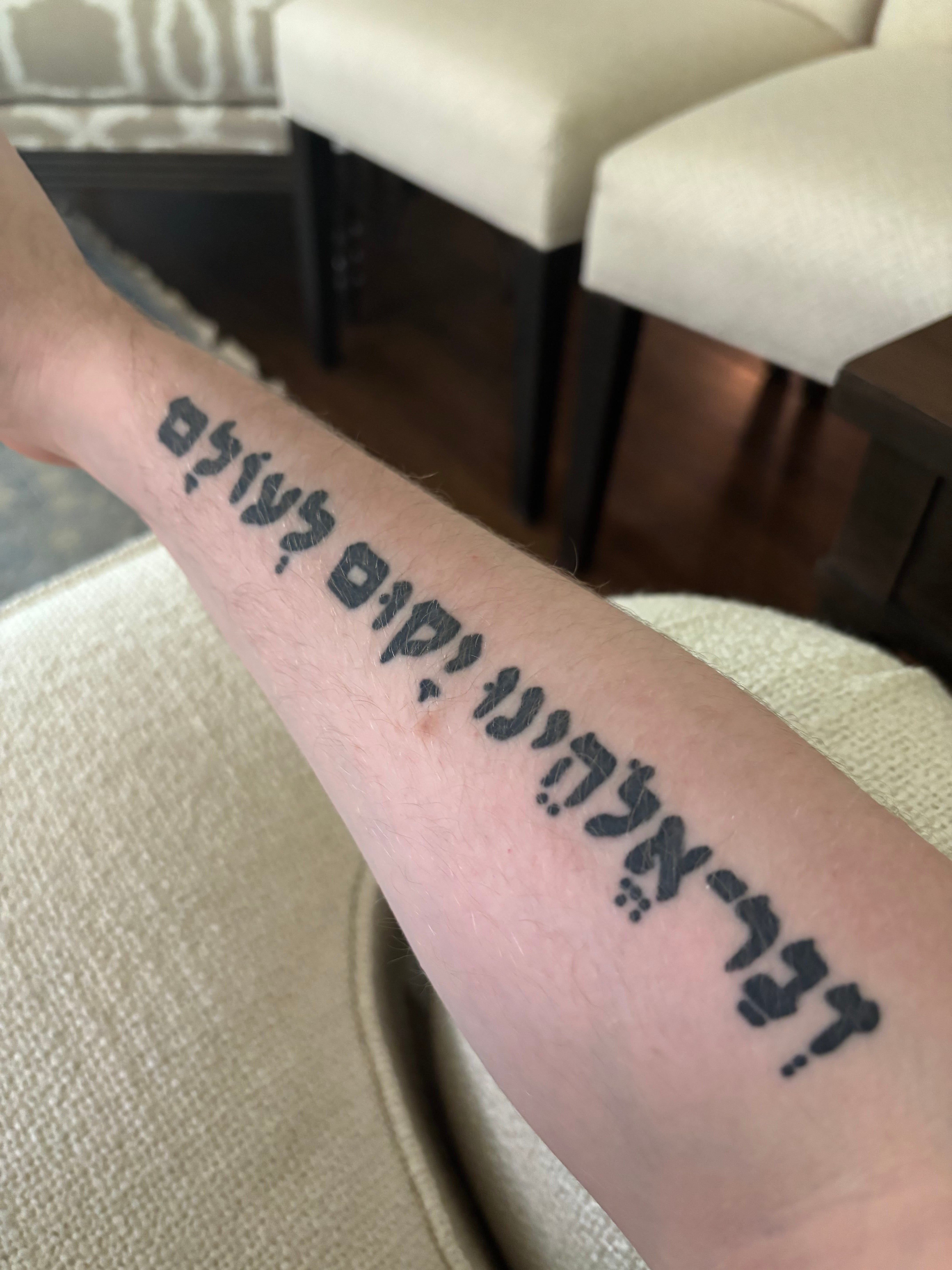
“The Word of our God shall stand forever” [I.e. is always fulfilled. In Biblical Hebrew, ‘D’var means “word” in addition to “thing” as in Modern Hebrew, as in Devarim/Words, the Book of Deuteronomy, or D’var Torah. Yakum means everything from “he/it will get out of bed” to “He/it will rise up and oppose/take his stand in battle”]. This is half of Isaiah 40:8, which reads in full:
יָבֵ֥שׁ חָצִ֖יר נָ֣בֵֽל צִ֑יץ וּדְבַר־אֱלֹהֵ֖ינוּ יָק֥וּם לְעוֹלָֽם׃
“Grass withers, flowers fade, but the Word of our God shall stand forever”.
Yet my justification (such as it is) for the very idea of getting a Jewish tattoo derives from the following verse in Isaiah 45:
זֶ֤ה יֹאמַר֙ לַיהֹוָ֣ה אָ֔נִי וְזֶ֖ה יִקְרָ֣א בְשֵֽׁם־יַעֲקֹ֑ב וְזֶ֗ה יִכְתֹּ֤ב יָדוֹ֙ לַֽיהֹוָ֔ה וּבְשֵׁ֥ם יִשְׂרָאֵ֖ל יְכַנֶּֽה׃
“One shall say, “I am GOD’s,”
Another shall use the name of “Jacob,”
Another shall mark his arm “of GOD”
And adopt the name of “Israel.”
As the 2023 JPS Tanakh translates [This edition capitalizes God where the Name appears instead of using the traditional LORD by which “Adonai” has been rendered in English since the King James version of the 17th Century).
So that in essence was the spiritual basis of my final tattoo: an irrevocable affirmation of Judaism, however non-traditional; a revocation of all my previous tattoos in substance and meaning; and a burn-the-scabbard moment of total commitment to Jewish destiny via an act that makes concealing my membership in the covenant quite literally impossible in some contexts. Where you go, I will go.
With that, I leave you with the following sonnet-adjacent work I dashed off earlier today. Am Yisrael Chai.
On My Tattoos
וְזֶ֗ה יִכְתֹּ֤ב יָדוֹ֙ לַֽיהֹוָ֔ה וּבְשֵׁ֥ם יִשְׂרָאֵ֖ל יְכַנֶּֽה׃

As I grow older slowly, I debate
Whether these words are less than circumspect,
And if I mimed the panoply of hate
For fear that only wicked men perfect

That strength which gives men dignity. It's true;
Mistaken for a convict, I would thrill
With apelike instinct that the vicious crew
Inferred in me a harder foe to kill.

Yet sear these signs, these mantras, from my skin
But leave that marking in the Holy script
With which I claim commitment to my kin
In life or in the darkness of the crypt,

That covenant, incised in ink and blood,
Isaiah once proclaimed in years gone by
That turns this desecration into good:
The Remnant would be marked, "Of Adonai".